Count Dracula may be more famous than the novel that created him. Even people who have never opened Bram Stoker’s book recognize the name, the castle, the bats, the fangs, and the elegant vampire in evening clothes. That familiarity creates an unusual problem for new readers: they often approach the original story believing they already know it.
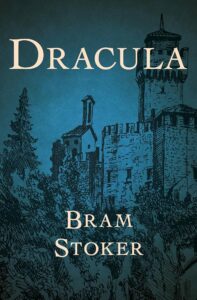
They usually do not. The Dracula of popular culture is a mixture of Stoker’s novel, stage productions, classic films, later romances, parodies, and more than a century of reinvention. The book published in 1897 is stranger, more experimental, more intensely Victorian, and in several ways more frightening than its reputation suggests.
So, is Dracula worth reading today? Yes. It remains one of the most atmospheric and influential Gothic novels ever written, but historical importance is not the only reason to read it. Its opening chapters are superb, its documentary structure still feels inventive, and its conflict between modern information and ancient terror has lost remarkably little of its power. At the same time, readers should expect uneven pacing, nineteenth-century language, and social attitudes that sometimes feel very distant from the present.
This spoiler-light Dracula book review will examine what still works, what has aged poorly, how difficult the novel is, how it differs from the movies, and what kind of reader is most likely to enjoy it.
Quick Answer: Is Dracula Worth Reading Today?
Yes, Dracula by Bram Stoker is worth reading today, particularly for readers who enjoy Gothic atmosphere, supernatural mysteries, Victorian fiction, unusual narrative structures, and books whose influence can still be felt throughout popular culture.
The strongest parts of the novel are genuinely excellent. Jonathan Harker’s arrival in Transylvania gradually transforms a professional journey into a nightmare of isolation and uncertainty. Later, letters, journals, newspaper reports, telegrams, medical records, and transcribed phonograph entries turn the story into an enormous supernatural case file. The characters must collect and organize information before they can even understand what they are fighting.
The important qualification is that Dracula is not paced like a modern horror thriller. It can be repetitive, the Count is absent for surprisingly long stretches, and some conversations feel more functional than dramatic. Several portrayals of gender, nationality, medicine, and mental illness also require historical context rather than uncritical acceptance.
- Best quality: its atmosphere and documentary method of storytelling.
- Biggest weakness: uneven pacing after the extraordinary opening.
- Reading difficulty: moderate, mainly because of Victorian prose and phonetic dialect.
- Best suited for: patient readers who enjoy Gothic suspense and literary history.
- Overall verdict: flawed, fascinating, and still genuinely entertaining.
What Is Dracula About?
A Spoiler-Free Overview of the Story
Jonathan Harker, a young English solicitor, travels to Transylvania to assist a nobleman named Count Dracula with the purchase of property in England. Harker initially treats the journey as an unusual but ordinary professional assignment. The customs of the local people confuse him, their warnings appear superstitious, and his host seems eccentric rather than immediately dangerous.
Inside the Count’s remote castle, however, ordinary explanations become increasingly difficult to maintain. Harker realizes that his freedom is limited, that his host possesses impossible abilities, and that Dracula’s interest in England is far more threatening than a simple real-estate transaction.
The narrative then expands beyond Harker. In England, Mina Murray waits for news of her fiancé while visiting her friend Lucy Westenra in the seaside town of Whitby. Dr. John Seward records medical observations on a phonograph, Professor Abraham Van Helsing brings unconventional knowledge to a mysterious illness, and a collection of friends gradually discovers that their separate experiences belong to the same terrifying pattern.
The story becomes both a Gothic horror novel and an investigation. Dracula is not merely encountered; he must be studied. His movements, properties, limitations, habits, and plans have to be reconstructed from incomplete evidence.
The Main Characters in Dracula
- Jonathan Harker: the solicitor whose Transylvanian journal opens the novel.
- Mina Murray Harker: a teacher with exceptional organizational, analytical, and typing skills.
- Lucy Westenra: Mina’s close friend, whose unexplained illness brings several characters together.
- Dr. John Seward: a physician who manages a private asylum and records his diary on a phonograph.
- Professor Abraham Van Helsing: Seward’s former teacher, willing to consider explanations that modern medicine rejects.
- Arthur Holmwood: Lucy’s fiancé, later known as Lord Godalming.
- Quincey Morris: a loyal American adventurer and friend of Arthur and Seward.
- Count Dracula: an ancient Transylvanian nobleman preparing to extend his influence into modern England.
Why Dracula Has No Single Traditional Protagonist
Jonathan appears to be the protagonist at first, but Dracula gradually becomes an ensemble novel. Mina emerges as its intellectual center, Seward supplies a large portion of the medical record, and Van Helsing gives the group a language for interpreting what rational habits alone cannot explain.
This shared protagonism matters because the characters survive through cooperation. No single hero possesses all the required knowledge. One person observes, another remembers, another types, another compares dates, and another recognizes patterns drawn from folklore. The structure of the book therefore supports one of its central ideas: isolated people are vulnerable, but information becomes powerful when it is shared.
Why Is Dracula Still Worth Reading?
The Opening in Transylvania Is Still Brilliant
The first section is the clearest answer to anyone wondering why read Dracula. Harker’s journey moves from trains and timetables into a landscape where his confidence in modern order begins to fail. Each stage of the trip takes him farther from familiar institutions and deeper into a world governed by warnings, rituals, and fears he does not understand.
Stoker does not reveal everything immediately. Dracula first appears as an unusual aristocrat: formal, intelligent, intensely interested in England, and surrounded by small impossibilities that Harker initially struggles to interpret. The castle becomes frightening through accumulation. There are no servants, locked doors restrict movement, mirrors acquire unexpected importance, and the Count’s habits refuse to fit the normal rhythms of human life.
The horror comes from the slow destruction of Harker’s assumptions. He has arrived with legal documents, professional manners, and the expectation that respectable business procedures will protect him. None of those things has authority inside the castle.
The Epistolary Format Makes the Horror Feel Real
Dracula is often called an epistolary novel, but it contains much more than letters. Its story is assembled from diary entries, telegrams, newspaper clippings, memoranda, a ship’s log, medical observations, and words first preserved on phonograph cylinders. The effect resembles an archive whose contributors did not initially realize they were documenting the same crisis.
This method creates suspense by limiting knowledge. Readers rarely receive an all-seeing explanation. They discover events through people who are frightened, confused, exhausted, or unable to communicate with one another quickly enough. When two records finally overlap, the connection can be more satisfying than a conventional narrator simply announcing the truth.
The structure also gives the novel the energy of an investigation. Readers who enjoy the evidence, deductions, and Victorian settings found in the best Sherlock Holmes books may appreciate how Stoker turns documents into clues, even though the threat here is supernatural rather than criminal.
Dracula Is More Frightening Than His Pop-Culture Image
Popular culture often presents Dracula as a sophisticated seducer, a wounded romantic, or a charismatic antihero. Stoker’s Count can be polite and calculating, but the novel does not ask readers to treat him as a misunderstood lover. He is a predator whose civility functions as camouflage.
That difference restores much of his menace. The Count does not explain himself through a tragic personal history, and the story rarely grants access to his private thoughts. Readers observe him from the outside through testimony, rumor, research, and evidence. The absence of a complete explanation keeps him strange.
Dracula is also frightening because he learns. He studies English customs, transportation, law, property, and language. He does not simply emerge from an ancient castle and attack modernity blindly; he intends to use modern systems for his own purposes.
Mina Harker Is One of the Novel’s Greatest Strengths
Mina is too often remembered only as Dracula’s intended victim, largely because adaptations have reduced or transformed her role. In the novel, she is indispensable. She transcribes shorthand, types phonograph recordings, orders documents chronologically, compares sources, studies maps and train schedules, and identifies patterns that the men around her repeatedly miss.
Her ability to convert private records into shared knowledge gives the group its greatest advantage. In a novel obsessed with communication, Mina becomes the person who makes communication possible.
Stoker’s treatment of her is contradictory. He gives her intelligence, courage, technical skill, and meaningful agency, yet other characters repeatedly praise her by comparing her mind to a man’s or try to protect her by withholding information. The novel admires her competence while remaining restricted by Victorian ideas about what an admirable woman should be.
The Characters Defeat Isolation Through Cooperation
Many Gothic stories isolate their characters until fear overwhelms them. Dracula begins that way, but its later movement depends on creating a community. Journals meant for private reflection become public evidence. Personal grief becomes collective determination. Professional boundaries between law, medicine, technology, religion, and folklore gradually break down.
This does not mean every character receives equal development. Arthur and Quincey can feel less psychologically detailed than Mina, Jonathan, Seward, or Van Helsing. Nevertheless, the group gives the book warmth and moral energy. Friendship is not decorative; it is a practical weapon against secrecy and despair.
Its Influence on Horror Is Almost Impossible to Measure
Stoker did not invent literary vampires. John Polidori’s The Vampyre, the long serial Varney the Vampire, and Sheridan Le Fanu’s Carmilla all appeared before Dracula. Folkloric traditions were older still.
What Stoker accomplished was a powerful synthesis. He brought together folklore, earlier vampire fiction, Gothic conventions, travel writing, modern communications, medical anxiety, religious imagery, and fear of foreign invasion. The resulting Count became the standard against which later vampires were measured.
Some qualities now treated as universal vampire rules come from Stoker, while others were strengthened or invented by theatre and film. Reading the novel reveals that the cultural idea of Dracula is not a fixed character but a long collaboration between literature, performance, cinema, and popular imagination.
The Major Themes That Keep Dracula Relevant
Modernity Versus Ancient Evil
Few elements make Dracula feel more modern than its enthusiasm for information technology. Harker writes in shorthand. Seward records his diary on a phonograph. Mina uses a typewriter to reproduce documents. Telegrams carry urgent messages, newspapers spread public information, and railway timetables help the group predict movement across Europe.
Yet technology cannot solve the entire problem. Modern characters must accept that older knowledge contains truths their education has trained them to dismiss. The conflict is therefore not a simple victory of superstition over science or science over superstition. The group succeeds only by refusing to make either system absolute.
This tension remains recognizable. Modern people possess more information than any earlier generation, but information alone does not guarantee understanding. Data must be interpreted, conflicting evidence must be compared, and intellectual pride can prevent obvious facts from being accepted.
Science, Religion, and the Limits of Knowledge
Van Helsing is both a doctor and a believer in possibilities that Seward considers irrational. He does not demand that medicine be abandoned. Instead, he argues that a truly open mind must recognize when its current categories are inadequate.
The group consequently combines medical procedures, legal research, empirical observation, religious symbols, and folkloric defenses. To a modern reader, some medical scenes are historically outdated. Blood groups were not identified until after the novel’s publication, and the transfusions described in the story belong to a much less reliable stage of medical knowledge. Their presence nevertheless demonstrates Stoker’s interest in contemporary science rather than an escape into a purely medieval fantasy.
Religious imagery is equally central. The book’s moral universe is explicitly Christian, and objects connected with faith possess real power within the story. Readers need not share that theology to understand its narrative function: religion provides the characters with rituals, boundaries, and a vocabulary for confronting evil.
Invasion, Foreignness, and Victorian Anxiety
Dracula moves from the edge of Europe toward London, the center of the British Empire. He studies England, purchases property, transports his native earth, and plans to enter the life of the metropolis. Critics frequently describe this pattern as an anxiety about reverse colonization: imperial Britain imagines itself becoming the target of an invading foreign power.
This interpretation helps explain the Count’s threat, but it also exposes one of the book’s limitations. Eastern Europe is often presented through Western fear, exoticism, and simplified cultural distinctions. Foreignness becomes part of the horror.
A modern reading should neither ignore this xenophobia nor reduce the entire novel to it. Dracula can be enjoyed as horror while also being examined as a product of an empire anxious about decline, migration, racial theories, and the stability of its identity.
Gender, Mina Harker, and the “New Woman”
The late nineteenth-century “New Woman” represented education, employment, greater independence, and resistance to restrictive gender expectations. Mina possesses several of these qualities. She works, studies new technology, travels, writes, organizes information, and repeatedly proves that she can contribute to decisions rather than merely wait for protection.
At the same time, the novel sometimes retreats from the implications of her competence. Men exclude her in the name of safety and associate feminine virtue with self-sacrifice, purity, and domestic loyalty. Lucy, whose language about marriage and desire is more playful, becomes connected with fears of uncontrolled femininity.
The result is not a straightforward feminist or anti-feminist message. It is a record of cultural tension. Stoker can imagine a woman whose modern skills save the group, but his characters still struggle to describe that intelligence without returning to traditional categories.
Desire, Repression, and Victorian Morality
Vampirism in Dracula frequently transforms attraction into danger. Respectable identities become unstable, physical desire threatens social order, and intimacy is associated with vulnerability and loss of control. The novel’s language often suggests more than its Victorian characters are willing to say directly.
This symbolic richness is one reason the book has produced so many different interpretations. Critics have read its vampires through heterosexual, queer, religious, medical, and political perspectives. No single interpretation explains every scene, but the recurrence of temptation, secrecy, bodily autonomy, and forbidden desire is impossible to dismiss.
Blood, Illness, and Contamination
Blood is biological, religious, hereditary, and social in the novel. It carries life, represents family and identity, and becomes the medium through which the vampire’s influence spreads. The characters speak about purity, strength, and inheritance using ideas shaped by Victorian medicine and social theory.
For nineteenth-century readers, fears of infectious disease and degeneration were part of public life. Dracula’s threat could therefore be understood both as an individual attack and as contamination that might spread through a population.
Modern readers should approach some of this language critically. Concepts of pure blood, racial hierarchy, and biological degeneration were tied to prejudices that later produced enormous harm. Recognizing that context makes the novel more historically intelligible without making those concepts acceptable.
Is Dracula Actually Scary?
Gothic Dread Rather Than Constant Shock
If you are asking is Dracula scary, the answer depends on what kind of fear you expect. The book rarely moves at the relentless speed of contemporary horror. Its power comes from isolation, anticipation, dreams, unexplained behavior, and the gradual realization that ordinary protections no longer work.
The Transylvanian chapters remain the most consistently frightening because Harker’s knowledge contracts as his danger increases. The maritime section is effective for a different reason: official records document a disaster without fully understanding it. Whitby then brings the foreign threat into a recognizable English landscape.
Will Modern Horror Readers Still Be Frightened?
Readers familiar with vampire conventions will predict some revelations that shocked early audiences. Cultural familiarity has removed part of the mystery. However, knowing what Dracula is does not eliminate the tension of watching intelligent people discover that knowledge for themselves.
The novel may produce unease more often than terror. Its best scenes create the feeling that something is wrong before the characters can name it. If you enjoy that slow tightening of atmosphere, Dracula can still be remarkably effective.
What Has Aged Well in Dracula?
The Documentary Storytelling Feels Surprisingly Modern
Stories told through messages, recordings, reports, interviews, and recovered files are now common. Dracula demonstrates how naturally that method can generate suspense. Every document is both a piece of narrative and an object that another character may need to find, copy, interpret, or conceal.
Mina’s act of compiling the archive resembles the work of an editor or data analyst. She converts incompatible formats into a searchable sequence and helps transform personal testimony into collective intelligence. That process feels more contemporary than the quills-and-castles image people sometimes associate with Gothic fiction.
The Conflict Between Information and Misinformation
The group possesses many correct observations long before it understands their meaning. Its problem is not a complete absence of evidence but fragmentation. Messages arrive late, assumptions distort interpretation, and important witnesses fear that their experiences will sound unbelievable.
This makes Dracula a novel about trust as much as knowledge. People must decide whose account deserves belief, when expertise has failed, and whether sharing disturbing information will protect others or frighten them unnecessarily.
Its Fear of Social and Technological Change Still Feels Familiar
The technologies are old, but the anxiety is not. Stoker’s characters are proud of modern progress while wondering whether progress has made them safer or simply created new routes for danger. The Count uses ships, property law, urban anonymity, and international transportation. Modern systems do not oppose him automatically; they can also help him move.
What Has Not Aged Well?
Victorian Gender Expectations
Mina’s competence makes the paternalism directed toward her especially frustrating. The male characters admire her but sometimes decide that knowledge is too dangerous for her, even when she has organized most of the knowledge they possess.
The novel also relies on a sharp division between idealized female purity and threatening female desire. Those assumptions can be examined as part of the book’s historical meaning, but they should not be mistaken for timeless truths about women.
Xenophobia and the Fear of the Foreign “Other”
Descriptions of Eastern Europe, minority groups, accents, and physical characteristics sometimes reproduce prejudices common in late-Victorian British writing. The Count’s foreignness is repeatedly used to intensify his danger, while English social order is treated as something that must be defended from contamination.
Understanding the imperial setting helps, but context is an explanation rather than an excuse. Readers can value the novel’s craft while remaining critical of the worldview embedded in some of its language.
Dated Views of Mental Illness and Medicine
Dr. Seward’s asylum and his relationship with Renfield reflect nineteenth-century psychiatric assumptions. Renfield is sometimes treated more as a collection of symptoms and clues than as a person with dignity. His condition also becomes a Gothic signal that supernatural forces are nearby.
The medical portions should therefore be read as history-inflected fiction, not accurate guidance. They remain important to the plot and to the novel’s conflict between observation and interpretation, but modern psychiatry and patient rights operate according to very different principles.
Dialects and Cultural Stereotypes
Stoker writes several accents phonetically, especially in the Whitby chapters and in Van Helsing’s English. Some readers find these voices colorful; others find them exhausting or caricatured. Van Helsing’s unusual grammar is particularly divisive because he delivers some of the longest explanations in the book.
The Biggest Weaknesses of Dracula
The Pacing Becomes Uneven After the Opening
The castle chapters create an almost impossible standard for the remainder of the novel. Once the setting moves to England and the number of narrators increases, the story becomes slower and more procedural. The mystery surrounding Lucy takes time to develop, while the later search requires repeated discussions of plans, properties, routes, and boxes.
This slower approach is not entirely a failure. It allows uncertainty to accumulate and makes the group’s investigation credible. Nevertheless, readers expecting every chapter to resemble Harker’s imprisonment may be disappointed.
Dracula Sometimes Disappears From His Own Novel
The Count is most memorable when directly present, but much of the novel focuses on consequences, traces, and attempts to predict him. This preserves mystery, yet it also prevents Stoker from developing him with the psychological complexity modern readers may expect from a title character.
Dracula functions more as a force than as an intimate portrait. For some readers, that distance makes him frightening. For others, it makes him less interesting than Mina, Harker, Seward, or Van Helsing.
Some Sections Feel Repetitive
The documentary form permits several characters to describe related events, which can strengthen realism but also repeat information. Van Helsing occasionally delays a clear explanation, and the group may confirm plans more than once. Serialization was not the cause—Dracula was first published as a complete novel—but its expansive Victorian style can still produce that impression.
The Narrative Voices Are Not Always Distinct
Harker’s controlled professional journal, Seward’s medical record, and Mina’s careful observations begin with recognizable qualities. As the crisis intensifies, however, several narrators adopt a similarly elevated and emotional style. The documents remain structurally varied even when the personalities behind them are not always as different as the format promises.
Is Dracula Hard to Read?
How Difficult Is the Victorian Language?
For most readers accustomed to classics, Dracula is moderately difficult rather than exceptionally hard. Its sentences are usually clearer than the most complex Victorian prose, and the urgent situations often make meaning obvious from context.
The greatest obstacles are unfamiliar vocabulary, long explanations, phonetic accents, and shifts between narrators. Van Helsing’s dialogue may require slower reading, while the dated medical and legal terminology can interrupt the flow.
If you are wondering is Dracula hard to read, it is generally more accessible than its age and reputation imply, but less effortless than a modern thriller. Readers wanting a shorter introduction to Victorian suspense might first explore whether A Study in Scarlet is a good book for modern readers.
Is Dracula a Slow Book?
It is uneven rather than uniformly slow. The journey to the castle is tense and focused. The Whitby material includes memorable set pieces. Other portions spend considerable time on illness, observation, consultation, and planning. The final movement becomes more urgent again, although its resolution is faster than some readers expect.
How to Make Dracula Easier to Read
- Choose an unabridged edition with explanatory notes. Notes can clarify geography, technology, medicine, and expressions without changing Stoker’s text.
- Keep a short character list. The main group is manageable, but titles and surnames sometimes change.
- Notice the dates. Chronology is central to the investigation, not decorative information.
- Read regularly. The archive becomes harder to follow if too much time passes between sessions.
- Accept the change of pace. The book evolves from trapped-traveler horror into medical mystery and then collective pursuit.
- Do not expect a modern romantic vampire. That expectation distorts the experience before it begins.
Dracula the Book vs. Dracula in Movies
The Original Count Is Not a Tragic Romantic Hero
Several adaptations connect Dracula and Mina through reincarnation, lost love, or mutual romance. Stoker’s novel does not give them that relationship. The Count’s interest in her is threatening and strategic, not an invitation to understand him as her destined partner.
The book contains attraction, temptation, and suggestive symbolism, but those elements should not be confused with a conventional love story. Dracula is neither the narrator of his own tragedy nor a hero seeking emotional redemption.
What Popular Culture Changed About Dracula
The high-collared evening cape owes much to stage and film traditions. The polished Central European gentleman associated with Bela Lugosi is only one interpretation. Other performers emphasized physical menace, romance, aristocratic loneliness, or monstrous transformation.
Sunlight provides another famous difference. In the original novel, daylight limits Dracula’s supernatural freedom but does not instantly destroy him. The fatal reaction to sunlight became firmly associated with vampires through later cinema, particularly Nosferatu.
The novel’s Dracula can alter his apparent age, command certain animals, influence weather, move in unnatural ways, and take different forms. Adaptations select, simplify, or ignore these abilities depending on the story they want to tell.
Why Knowing the Adaptations Can Make the Book More Surprising
Readers often recognize names while encountering an unfamiliar plot. Renfield, Van Helsing, Mina, Lucy, and Jonathan have been rearranged so frequently that returning to Stoker can feel like discovering the original pieces of a puzzle after seeing dozens of alternative solutions.
The book is less centered on a duel between Dracula and Van Helsing than many films suggest. It is more interested in archives, friendship, travel, medicine, and the labor required to assemble reliable knowledge.
Dracula vs. Frankenstein: Which Should You Read First?
Two Gothic Classics With Very Different Monsters
Dracula and Frankenstein are often placed together because both became foundations of modern horror. Their central threats, however, move in opposite directions. Dracula represents something ancient entering modern society. Frankenstein’s creature is produced by modern ambition, scientific experimentation, and a creator who refuses responsibility for what he has made.
The differences also extend to sympathy. Mary Shelley gives the creature language, memory, suffering, and a desire to explain himself. Stoker keeps the Count comparatively distant. Shelley asks readers to reconsider who the monster is; Stoker asks how a community can recognize and resist a predator.
Which Book Is More Philosophical?
Frankenstein more directly explores creation, parental responsibility, education, rejection, and the moral limits of knowledge. Readers interested in those questions can examine whether Frankenstein is still a good book for modern readers and learn more about Mary Shelley’s life and literary legacy.
Which Book Has More Suspense?
Dracula offers more external suspense, travel, investigation, and confrontation. Its opening is more immediately frightening, while its changing documents create the pleasure of assembling evidence. Frankenstein is more intimate, tragic, and reflective.
The Best Choice for Different Readers
Choose Dracula first if you want Gothic atmosphere, supernatural mystery, and a group of characters pursuing an external threat. Choose Frankenstein first if you prefer moral ambiguity, philosophical questions, and a more sympathetic monster. Both deserve to be read without allowing their movie versions to define them in advance.
Who Should Read Dracula?
Readers Who Love Gothic Atmosphere
Castles, ruins, storms, graveyards, old houses, religious symbols, isolated roads, and threatening landscapes are not merely decorations. Stoker uses place to weaken the characters’ sense of security. Readers who value mood as much as action are the ideal audience.
Fans of Supernatural Mysteries
Much of the pleasure comes from determining the rules of the threat. The characters collect accounts, test theories, make errors, and gradually convert superstition into actionable knowledge.
Readers Interested in Victorian Society
The novel is filled with modern professions, transportation networks, communication devices, medical debates, imperial anxieties, and gender conflicts. It is both a supernatural adventure and an accidental museum of fin-de-siècle concerns.
Anyone Curious About the Origins of Modern Vampire Fiction
You will recognize countless ideas, but their original arrangement may surprise you. Reading the book makes later vampire stories easier to understand because their agreements and rebellions against Stoker become more visible.
Who Might Not Enjoy Dracula?
Readers Who Need Constant Action
The novel contains memorable confrontations, but it devotes more space to atmosphere, illness, testimony, and investigation than to physical action. Patience is part of the experience.
Readers Who Dislike Epistolary Novels
There is no conventional narrator to guide every transition. If repeated dates, documents, and first-person accounts feel artificial to you, the novel’s defining technique may become a barrier.
Readers Who Struggle With Dated Language and Attitudes
Some readers can place offensive or paternalistic ideas within historical context and continue engaging with the work. Others find those ideas too distracting. Neither response proves superior literary intelligence; classics are books, not entrance examinations administered by ghosts in waistcoats.
Content Considerations for Modern Readers
Dracula includes Gothic violence, death, illness, predatory behavior, threatening supernatural scenes, medical procedures, religious imagery, and outdated portrayals of mental illness and cultural difference. The novel can be intense, but its nineteenth-century style generally emphasizes atmosphere and implication rather than the sustained graphic detail common in some modern horror.
Who Was Bram Stoker?
A Brief Biography of Bram Stoker
Abraham “Bram” Stoker was born on November 8, 1847, in Clontarf, near Dublin, Ireland. He experienced a serious but unidentified illness during early childhood and spent years largely confined to bed. After recovering, he became an active student and successful athlete at Trinity College Dublin, where he participated prominently in both the Historical Society and the Philosophical Society.
Stoker entered the Irish civil service and wrote theatre criticism for the Dublin Evening Mail. His thoughtful review of actor Henry Irving’s performance in Hamlet helped begin the relationship that would shape most of his professional life.
In 1878, Stoker married Florence Balcombe and moved to London. Their only child, Irving Noel Thornley Stoker, was born the following year. Stoker continued writing fiction while managing an exhausting theatrical career, producing novels, stories, criticism, nonfiction, and a major memoir of Irving.
He died in London on April 20, 1912. Obituaries paid more attention to his work with Irving than to Dracula, an astonishing reversal from the way he is remembered today.
Henry Irving and the Lyceum Theatre
Stoker became acting manager and then business manager of Irving’s Lyceum Theatre, a position he held for approximately twenty-seven years. He organized productions, handled finances, coordinated tours, managed publicity, and participated in the social world surrounding one of the most famous actors of the Victorian stage.
The theatre may help explain the dramatic visual power of Dracula. Entrances, gestures, interiors, weather, lighting, voices, and revelations are arranged with a manager’s awareness of performance. Stoker could imagine not only what a scene meant but how an audience might experience its timing.
How Whitby Helped Shape Dracula
In 1890, Stoker visited Whitby, the Yorkshire coastal town that later became one of the novel’s most important settings. Its abbey ruins, churchyard, steep steps, harbor, storms, maritime history, and local names supplied material for his notes.
At the Whitby library, he consulted William Wilkinson’s book about Wallachia and Moldavia. Stoker encountered the name “Dracula” and noted Wilkinson’s claim that the word could mean “devil” in Wallachian. Before this discovery, his developing vampire had been called Count Wampyr.
This chronology is important because it shows that the vampire concept existed before the famous name. Whitby did not give Stoker his first idea for a supernatural story, but it helped give that story geography, documentary texture, and an unforgettable title.
Was Dracula Really Based on Vlad the Impaler?
The safest answer is: only in a very limited sense. Vlad III, the fifteenth-century ruler commonly known as Vlad the Impaler, belonged to the historical House of Drăculești and fought the Ottoman Empire. Later popular accounts frequently claim that Stoker carefully modeled his vampire on Vlad’s life.
Stoker’s surviving notes do not support such an extensive connection. They indicate that he encountered the name Dracula and a small amount of information about a Wallachian ruler, but there is no strong evidence that he knew the detailed history now routinely attached to the novel. He never visited Transylvania or Romania.
It is therefore reasonable to say that the historical name contributed to Count Dracula, while the fictional character came primarily from Gothic literature, vampire traditions, Stoker’s research, and his own imagination. Treating Vlad and the Count as the same figure confuses history with a mythology built largely after the novel.
Other Books Written by Bram Stoker
Although Dracula dominates his reputation, Stoker wrote several other novels. The Mystery of the Sea combines romance, adventure, codes, and supernatural suggestion. The Jewel of Seven Stars explores Egyptology and archaeological horror. The Lady of the Shroud returns to apparent vampirism in a political adventure, while The Lair of the White Worm offers a bizarre late work about an ancient monstrous presence.
None achieved the cultural reach of Dracula. The novel’s early reviews were generally positive, but it did not make Stoker wealthy or immediately secure his place among the greatest Victorian writers. Stage and film adaptations helped the Count grow larger than both the book and its author.
What Should You Read After Dracula?
If the vampire mythology is what fascinates you most, Sheridan Le Fanu’s Carmilla is the essential earlier work. For divided identities and repressed Victorian fears, Robert Louis Stevenson’s Strange Case of Dr Jekyll and Mr Hyde is a shorter and more concentrated choice. Henry James’s The Turn of the Screw is ideal for readers who prefer ambiguity, while Matthew Lewis’s The Monk reveals the scandalous energy of earlier Gothic fiction.
You can explore these connections in our guide to five essential books like Dracula. Readers who want emotional intensity and destructive Gothic relationships may also enjoy these books like Wuthering Heights for fans of dark and tragic romance.
Final Verdict: Is Dracula Worth Reading Today?
Does Dracula hold up today? Much of it does. The Transylvanian opening remains masterful, the documentary structure feels inventive, Mina Harker is far more capable than many adaptations suggest, and the collision between communication technology and an ancient supernatural threat remains intellectually rich.
Not everything has aged equally well. The middle can be slow, some information is repeated, the Count receives less direct attention than his fame leads readers to expect, and the novel carries Victorian prejudices concerning gender, nationality, mental illness, and biological purity. A responsible reading should acknowledge those elements rather than hiding them behind the word “classic.”
Yet the weaknesses do not reduce the book to a historical curiosity. Dracula still offers suspense, memorable settings, imaginative storytelling, and a surprisingly warm belief in friendship and shared knowledge. Its influence matters, but the novel is worth reading for the experience it still provides.
If your question is simply should I read Dracula, the answer is yes—especially if you can accept Victorian pacing and approach the novel itself rather than the romantic vampire created by later culture. It may be older, stranger, and slower than expected, but its best pages have lost very little of their bite.
Frequently Asked Questions About Dracula
Is Dracula a Good Book?
Yes. If you are asking is Dracula a good book, its lasting reputation is supported by more than influence. It combines Gothic atmosphere, suspense, memorable characters, historical themes, and an innovative documentary structure. Its pacing and dated attitudes are genuine weaknesses, but they do not erase its literary strengths.
Is Dracula Difficult to Read?
Dracula is moderately difficult. The narrative is usually clear, but Victorian vocabulary, long explanations, phonetic dialect, and frequent changes of narrator can slow modern readers. An annotated, unabridged edition and a simple character list can make it considerably easier.
Is Dracula Too Slow for Modern Readers?
Some sections may feel slow, particularly after the fast and frightening Transylvanian opening. The novel spends substantial time on medical observation, correspondence, and planning. Readers who enjoy investigation and atmosphere generally tolerate that pace better than readers seeking constant action.
Is Dracula Still Scary?
It can be, although its fear is mostly atmospheric. The novel creates dread through isolation, uncertainty, invasion, and the gradual discovery of impossible events. Readers accustomed to graphic contemporary horror may find it less shocking but still deeply unsettling.
Is Dracula a Romance Novel?
No. The original novel contains desire, marriage, loyalty, and suggestive Gothic symbolism, but Dracula is not presented as Mina’s tragic destined lover. The famous reincarnation romance belongs to later adaptations rather than Stoker’s story.
Was Dracula the First Vampire Novel?
No. Important vampire fiction preceded it, including John Polidori’s The Vampyre, Varney the Vampire, and Sheridan Le Fanu’s Carmilla. Dracula became the most influential synthesis of the tradition, not its starting point.
Was Count Dracula Based on Vlad the Impaler?
The connection is limited. Stoker encountered the name Dracula and brief historical information connected with Wallachia, but his surviving notes do not show detailed knowledge of Vlad III’s life. The claim that the fictional Count is a carefully researched portrait of Vlad was largely developed after the novel.
Does Sunlight Kill Dracula in the Original Book?
No. Sunlight restricts Dracula’s supernatural powers and freedom, but it does not instantly destroy him. Fatal sunlight became a standard vampire convention through later film history.
Should You Read an Abridged or Unabridged Edition?
Choose an unabridged edition if possible. The slower portions are part of the novel’s accumulation of evidence and atmosphere. An edition with historical and vocabulary notes is usually more helpful than one that solves difficulty by removing Stoker’s material.
Is Dracula a Good Introduction to Gothic Literature?
Yes, especially for readers interested in supernatural horror. It contains haunted architecture, threatening landscapes, religious imagery, forbidden knowledge, isolation, anxiety about identity, and the return of the past. It also points both backward to earlier Gothic traditions and forward to modern horror.
